




With all the piqued interests, the meet and greets, and the rehearsed anecdotes that don’t read as either too overshare-y or too forgettable, modern dating can start to feel like you’re interviewing for a job you’re not entirely sure you want. A Groundhog Day of the same questions, the same answers, the same carefully calibrated version of yourself — competent, charming, just vulnerable enough to still seem human, but not enough to be inconvenient.
You sit across from someone explaining the bullet points of your personality like it’s the skills section on your C.V. Strengths: emotional availability (on a good day), three meals cooked from memory, owning a plant that is, just about, still alive. Weaknesses: overthinking, occasionally rambling, an inability to flirt naturally. We’re all performing a lovableness in order to be loved, and somewhere in the process, our humanity leaks out.
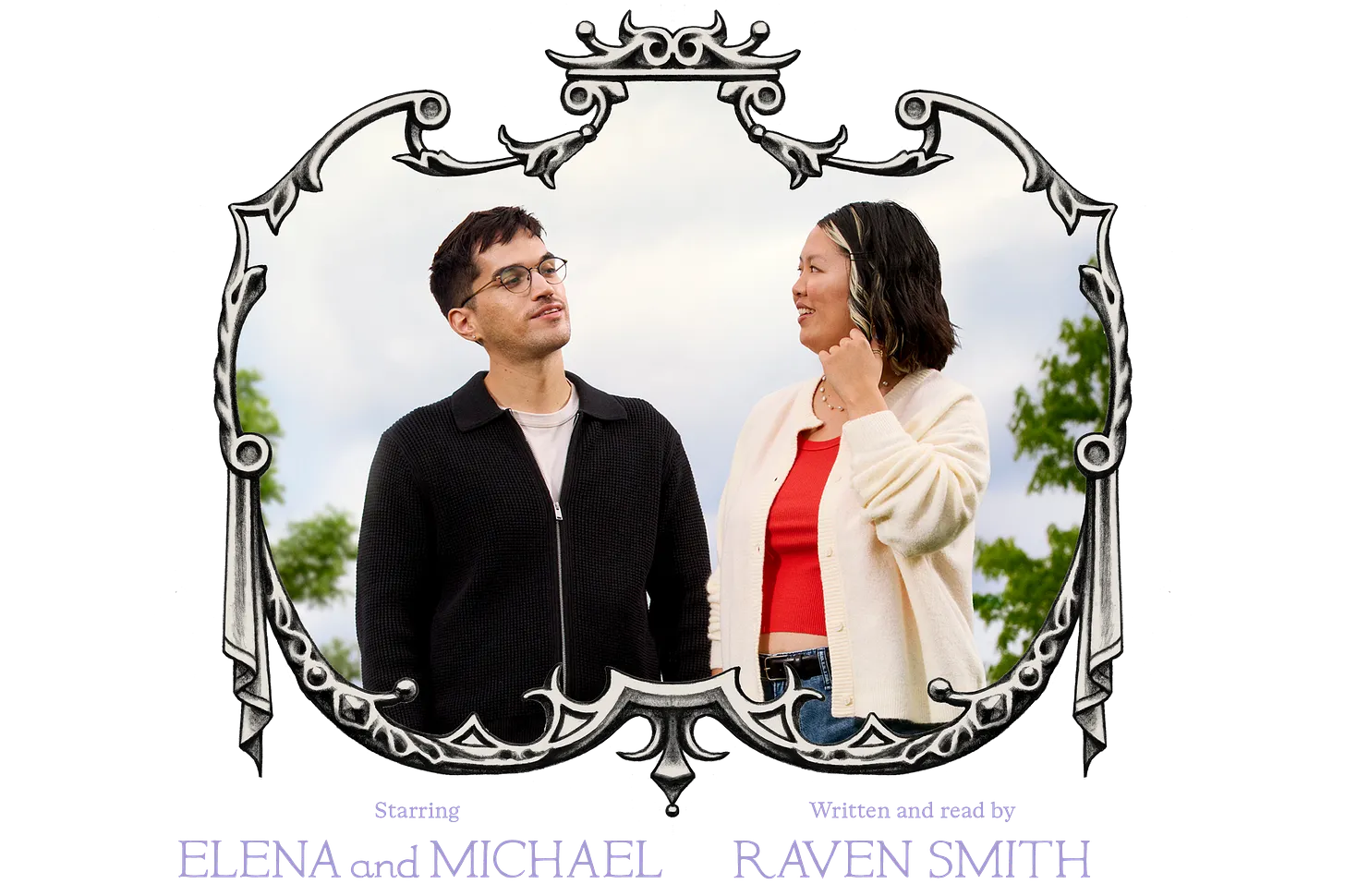
One day at home, Elena, a woman with a remarkable tolerance for disappointment, was rifling through Hinge. She had been single for a few months now, occasionally feeling the familiar tug towards the emotional intimacy of two people rather than one. She had been on what she describes, without a hint of exaggeration, as hundreds of dates: “I feel like I’ve done the whole gamut,” she says. “Hinge … in-person dating … speed dating. You’re running through the same things, and you can tell people are going through the motions.”
Throwing the proverbial penny into the love fountain and getting zero return on investment, Elena stopped expecting anything from the dating circuit. She didn’t retreat in a dramatic, lying-on-the-floor-listening-to-“Nothing Compares 2 U” way. She just quietly, practically, and wholly built a life that was full in and of itself. It was a good life, and it was hers. “I was very comfortable being alone,” she says. “If I’d spent the rest of my days on my own … I would have been perfectly happy.” This is how Elena ended up on a dating app with, crucially, not quite no hope, but low hope.
Michael had been on Hinge for two weeks when he met Elena. Unlike many of his male counterparts slowly assimilating to the echo-y call-and-response of modern dating, he’d endured the apps strangely untouched by the whole shebang. Not because he was naive, exactly, but dating simply hadn’t occupied a huge amount of brain-space for him. Michael had spent the previous years focused on family and work, not so much avoiding dating as enjoying living. It took his therapist casually asking why he wasn’t dating for him to realize he didn’t really have a reason.
When Elena found him, what struck her wasn’t his inexperience so much as his absence of performance. There was no familiar sense of somebody optimizing themselves into desirability. The pictures with his cats were straight up silly. Michael’s answers to the profile prompts wandered, they elaborated, they felt like talking to a friend. Michael asked: Teach me something about your obsessions. What works of art do you always find yourself returning to? What hobbies threaten to engulf every aspect of your life? Elena was immediately charmed. She felt she was looking at somebody who had spent enough time alone to know what mattered to him, a person who had already done some of the emotional work.
Michael had a similar reaction. Elena’s profile left him feeling equal parts curious, impressed and slightly intimidated. “What an amazing, realized person,” he remembers thinking. “I want to know more.”
Michael and Elena’s first date wasn’t romantic, all eye contact and footsie and perfectly timed laughter. It was a meet and it was cute, but it wasn’t completely romcom. There was, instead, much ado about, of all things, a mushroom dish. Michael chose the restaurant after a brief but intense research project. “I was scouring Reddit,” he says. “Like, where do I take this wonderful woman?” The answer, unfortunately, was somewhere that serves mushrooms stone cold, soaking in oil, too much garlic, and some worryingly nondescript herbs.
Buoyed by first date nerves, they both mouthfuled the mushrooms in polite silence, two people who have agreed, without saying it out loud, to choose endurance over rudeness (such is date etiquette). Elena didn’t want to be the person complaining at the outset of a date, marking her out as dissatisfied. A dropped stone of displeasure could ripple out into the first date and become who is this person I’ve just met? Despite similar concerns and the general anxiety attached to first dates, newly-dating Michael was compelled to speak, to name his displeasure as the mushroom coated his tongue. “I’m not going to lie,” he said, gesturing to the fungi paddling in a lake of fat. “This is terrible.” Elena laughed, struck by the realness and truth of his words.
This near-throwaway comment could have been such a small, seemingly inconsequential moment between dinner companions — a completely unremarkable remark — but mere dinner companions Michael and Elena were not. Michael’s honest aside was indicative of something important: it broke the tone.
Michael didn’t like the mushrooms. Michael said he didn’t like the mushrooms. And suddenly, in the midst of all the dual self-calibration, there was a perceptible lift; everything felt easier. The pressure to be your best tip-top self left the table, the oily mushrooms becoming a social lubricant, a gateway to real opinions, expressed with gusto. Michael and Elena weren’t polite people on a first date; they were actual people who happened to be on their first date. Michael had spent time finding the just-right restaurant, with the understandable expectation for just-right dishes, and this slight stutter in proceedings had sent the two strangers into a culinary camaraderie. They stopped being two strangers who met on Hinge asking each other how long they’d been on Hinge and morphed into a pair discussing their favorite places to get less oily fungi, crisper pizzas, deeper lasagna.
Their first date, a shared plate of an evening, disappeared like good pasta, an al dente back and forth of antipasti and affection. It ended with an awkward hug, not a kiss, simply because Michael suddenly realized it was time for the kiss and started overthinking the kiss, and before he knew it, the moment for the kiss was behind him.
Michael and Elena got into separate cars, and Elena reflected. No kiss … that’s interesting. It created a certain uncertainty. Michael seemed like he liked her. He liked her, right? She was getting more and more sure. She didn’t need reciprocity, a declaration of feelings, but she also didn’t want the date to end, not just yet. “I just wanted to keep talking to him,” Elena remembers thinking.
Elena deliberated the rules of engagement, generously, for about 30 seconds before picking up the phone. Calling so quickly, so unabashedly felt objectively unhinged. There are ancient rules about this sort of thing: Thou Shalt Play it Cool. There are entire ecosystems built around pretending you don’t care as much as you do. Elena ignored all of it.
Michael answered the call and they talked. They really talked. About family, friendship, children, the kinds of questions usually rationed out carefully over months and months of dating. Elena found herself telling Michael about the occasionally tumultuous dynamics within her family, but also how deeply she loved them. She spoke about her friends, the people who had shown her that life could still feel joyful and meaningful outside of romance, with near-religious zeal. Michael asked questions that belonged specifically to her, not in interchangeable, recycled first-date prompts. The conversation stopped feeling introductory. It felt like two people trying to understand each other properly.
After their phone call, Elena found herself thinking about Michael constantly. She remembers crooning to her sister about Michael for hours after the date, replaying tiny details with forensic enthusiasm. There was a momentum that felt exhilarating and just the right amount of trepid.
A few days later, Elena debated whether asking Michael to hang out again so quickly made her seem too eager. Modern dating culture trains people to ration their enthusiasm carefully, to stagger affection into manageable morsels. But, after an entire day spent thinking about him anyway, Elena decided she didn’t care.
She invited Michael to a park where they did something risky: they talked honestly, moreish-ly exchanged information, aspiring to that particular sense of continuity when two lives suddenly, joyously, intersect. A strange accelerating intimacy, before societal conventions could interrupt proceedings.
Elena talked about her last relationship. She told him how her ex had been hanging out with another girl, and it was all a secret. Elena couldn’t understand why it needed to be secret if it was innocent. Michael listened. He didn’t have a secret secret but he had omitted something when Elena had asked him about his day. He didn’t mention a date with another girl that morning. A normal man-who’s-new-to-Hinge date. Telling Elena didn’t seem appropriate, it wasn’t appropriate. But it was, if not dishonesty, a deliberate exclusion, a way to start date three with Elena on the right foot, to keep the dating boat on course.
As Elena talked more honestly about honesty, something in Michael — something newer, something he’d only just learned to trust — pushed forward. Over his lifetime, Michael had spent too long listening to a different voice, the anxious one, the one that says: don’t say too much, don’t get it wrong, don’t make things complicated. “My brain is always trying to keep me safe,” he says, “but my body just knew.” He listened to the new, microscopically louder voice, and decided to speak up.
“In full transparency,” he remembers gently telling Elena, “I just want you to know I went on a date with somebody else this morning.” There it is: the undramatic, unloaded truth. Elena, thrown by the revelation, kept walking; a thousand thoughts crashed on the shore of her brain. Logically, she understood it, of course she did, but … “My heart fell through my chest,” she says. The understatement of the century.
Inside her, logic battled feelings, head and heart dueled it out. They were early. This whole thing was early. They were, technically, nothing. A veteran dater and a newbie. He was allowed to date other people. Not even allowed, he should date other people. Emotionally, though, the logic of having just met dissolved. “I just wanted to talk to him,” she remembers, but she didn’t say that out loud. Instead, she performed the socially correct response. “That totally makes sense,” she told him. “You should meet other people.” They moved on. Or tried to. The other date a silent incision between them.
An hour later, they were still out, talking about other things, about any other things, but something had changed. The hill felt more like a tilted floor and Elena could feel herself slipping. She said nothing as the earth moved. Michael noticed because he notices things. He noticed the break in the tenor, the synergy, the overlapping of Venns.
For Michael, it would have been incredibly easy to leave it there, to let the moment pass, to preserve the version of the date that is a smooth pebble — uncomplicated, unjagged, heading steadily towards something pleasant but possibly forgettable. Instead, he went back, that voice he’s still now learning to trust, navigating him through an untimely swell in the third-date ocean. He broached. He turned to face Elena. “I just want to give you space to process it,” he told her. “To feel anything you feel.” Michael’s is a very specific kind of sentence, one that requires attentiveness, sure, but it invited something almost avant-garde in the realm of early dates: reality. Elena paused.
Elena had a choice. She could continue performing the version of herself that is reasonable, unbothered, easy to date. The version of herself that’d been on hundreds of dates, dated hundreds of dead-end douchebags, stomached hundreds, if not thousands, of disgusting mushrooms. The version of her that was currently still out there, still looking, still dating after all the incompatible misfires. But the version of herself that had been dishing out ever so slightly less Elena — just to ease proceedings — was tired. Tired of holding back, tired of tiptoeing around her truth. She could have remained this former, dating-roulette Elena, or she could say the thing. The thing she really feels, regardless of the dating matrix we’ve all become so accustomed to. The truth, the uncomfortable truth.
She turned to Michael, looked him in the eyes, and decided to say the thing before it necessarily felt safe to say the thing. She said the thing because she had to say the thing: “I don’t think after meeting you that I want to see anybody else.” And then, because, well, she’d come that far, “I don’t want to be compared to other people. I don’t want to feel like I’m on ‘The Bachelor.’” Naming discomfort out loud on a third date seemed risky, the kind of risky you avoid at the dawn of a new person. She rocked the boat or at least nudged it off the much-charted, CV-safe first-few-dates course. An off-script ad-lib. A leap. “It felt like I was laying my heart out,” she says. “And offering it to someone who could just … smash it.” Is vulnerability in its purest form a sort of unprotected bravery? A transmission without the guarantee of a return call, a jump without guarantee of a soft landing?
It landed. Of course, it landed because Michael is Michael. Elena’s call was returned. Not softly, exactly, but cleanly. Michael didn’t receive it as pressure, but as an invitation. “I felt relief,” he says. “Not pressure, not confusion. It was an invite, rather than an instruction.” He paused, because the honesty deserved more than an instinctive, quick-fire answer. “I wanted to reciprocate that honesty, and that necessitated some time to truly understand how I felt,” he adds. “I felt like I owed that to her, and also to everyone else I had met in those two weeks on Hinge.”
Michael told Elena as much: “Thank you for sharing that with me. I see why you feel that way. Can I have some time to think about it? As soon as I know, you’ll know. I don’t want you to sit in this feeling longer than you need to.” And Elena, somehow, didn’t retreat. “Yeah,” she said. “That totally makes sense. I appreciate it.” The mutual relief between them was palpable. The hill tilted back. They were third date off-piste because neither of them was pretending anymore. Dating apps suggest abundance. But when you’re standing on a hill, in the dark, with someone who has just told you exactly how they feel, all those options start to feel superfluous.
After walking around the park, Michael was suddenly ready for the kiss. Michael’s appetite for the kiss was the opposite of his appetite for the mushrooms. This was the moment for the first kiss. They both felt it. I want to kiss her. “I want to kiss you,” he told her. Without missing a beat, Elena looked him dead in the eye, sincerity at the forefront, “I’m not going to be the second person you kiss today,” she rebuked. Elena might be falling head over heels in love, rewriting the rules of courtship, coloring outside of the lines, but she hasn’t lost her sense of self completely.
After spilling her guts on the hilltop, Elena spent the next day in an emotional holding pattern. She circled but never spiraled. She did the right thing, surely? If it’s not meant to be, that’s OK, isn’t it? Michael texted, asking to call her after work. “I remember thinking, this is either really good news or really bad news,” she says. The rest of the working day felt like eons, the low-grade hum of anticipation. Don’t get your hopes up, don’t overthink this.
A few hours later, Michael called from his car and told her, “I thought about it. I talked to the other girl … and I told her that I feel like I have a good shot with someone else.” There was no drama, no grand declaration, just a decision. They had a good shot. It sounds so simple, but it’s not. Two people with their heads screwed on, and their feet on the ground, very quietly taking off. “The goal for me was never to be on the apps to just be on the apps,” Michael remembers reassuring her, “I just wanted to meet someone. And I met you.” Gulp.
What makes Michael and Elena feel different is how it all started. Not with perfection, or even certainty, but with a series of small, slightly uncomfortable decisions to be honest. None of it is particularly grand, per se. But it is, collectively, rare. “I just want to see someone and be seen by them,” Elena says. A straightforward idea in theory, until you realize what it actually requires. You have to say the thing. The big, should I, shouldn’t I thing. You have to say the thing even when it’s too soon, and too inconvenient. You have to say the thing when it’s much easier to just … not. You have to say the thing, and then see what happens.
Raven Smith is a London-based, “Sunday Times” bestselling author and columnist whose work revolves around social commentary known for his irreverent tone and eye to catch something unique in the banal he has developed a legion of fans.
His first book, “Raven Smith’s Trivial Pursuits,” was published in 2020 and his second book, “Raven Smith’s Men” was described as “Wise, sharp and naughty” by “The Observer” and published in 2022.
In addition to his popular Vogue column he produces weekly, Raven is currently developing his third book while hosting red carpet premieres and writing for clients including MUBI, “Cultured” magazine, “Mr Porter,” and “Esquire.”
He lives in London with his husband, daughter and cat, Hastings.